
A Destination Marketer’s Guide to Keeping Your Audience Fresh
The most dangerous audience in your marketing plan is the one that’s converted steadily for years.
It’s easy for destination marketers to default to audiences that faithfully perform. In the short-term, it makes sense. Over time, though, that knee-jerk reliance can blind you to crucial changes in your audience’s preferences and makeup.
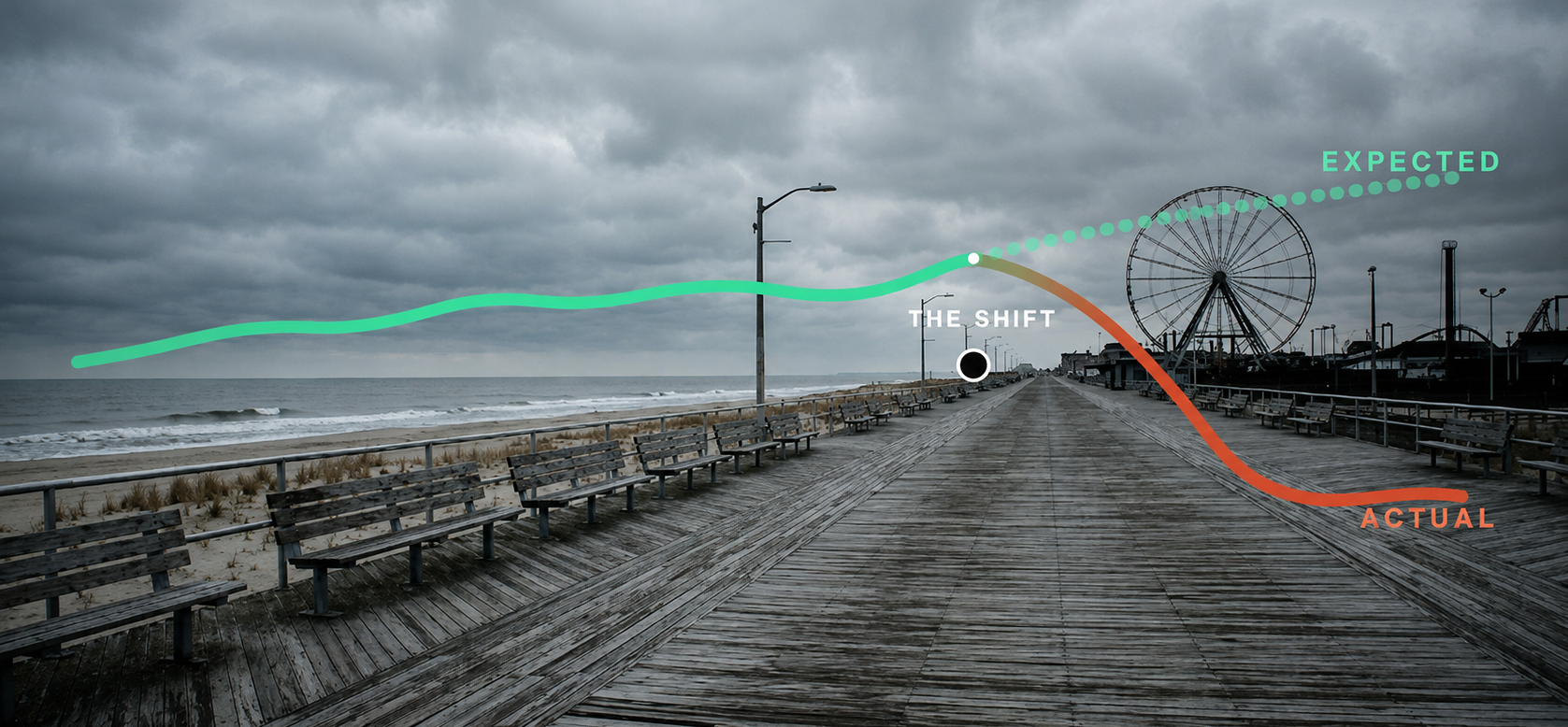
That’s exactly what happened to one destination operator we worked with. They sold the same guided package to the same kind of traveler for thirty years. It worked well enough for so long that nobody questioned it. The personas hadn’t been touched in years. Then, over a couple of quarters, the bookings that had never wavered suddenly started to soften.
When it comes to audience targeting, success can be a cover for atrophy. Here’s how to think about your audiences so they’re always fresh.
The habit that hides the shift
Audiences shift for a lot of reasons, and most of them have nothing to do with your marketing. Preferences change: the traveler who wanted a guided tour five years ago wants to plan the trip themselves now. Competitors show up with something that feels newer or better timed. Sometimes the pressure comes from outside travel altogether, like a tariff or a headline that makes a trip feel like more cost or risk than it’s worth. None of that is within your control. What matters is noticing the effect before it shows up in your numbers.
An audience’s steady reliability is exactly what makes it hard to see when something’s off. Teams that have spent years defending a persona set read early warning signs as noise, not signal, because the alternative means questioning the audience that built the business.
When bookings from a segment soften, the reflex is to put more money behind it, running more ads to win back a waning pool of attention. That’s a losing move. If what a segment wants has shifted (a new set of priorities, or a version of the experience they’ve simply outgrown), no amount of additional spend closes that gap.
The upshot: The travelers who want something from you right now may not be the ones you’ve spent the last decade talking to.
Look at your data with a discerning eye
The solution is to review your audiences at a regular cadence, even when they’re steadily performing.
How you read your booking data matters. Whether a segment is up or down is simply a starting point. The more important step is to investigate what’s changing underneath the numbers:
- Is a competing destination pulling your usual crowd toward something they want more?
- Is the reputation, or even the product, you built for one generation aging out along with that generation?
- Is something outside your control quietly changing what this audience can justify spending on?
- Is a different audience already showing up in your data, one you’ve never marketed to?
- Would a smaller shift, a different version of what you already offer, bring this audience back?
Watching the arrows go up or down tells you what happened. Asking questions like these is what tells you why.
Reframing your audience
Once you know why a segment is fading, the next step is to close the gap by reframing your audience, your messaging, and offerings, or both. Booking decisions come down to motivation, friction, and timing. Reframing is how you shift one of the three without waiting for a bigger budget to do it.
Reframing can mean speaking to the audience you already have in new and different ways. If your usual travelers are pulling back on big-ticket trips and gravitating toward budget-friendly options, that’s a signal to offer a version of the experience that fits: the self-guided option instead of the escorted one, the shorter itinerary instead of the week-long one. You’re reducing the friction they’re experiencing related to booking, not discounting the brand. Creating a budget-friendly offering does more for your existing audience than another round of ads trying to talk them into the usual bookings they’re already backing away from.
Reframing can also mean going after travelers you’ve never pursued before. That’s a motivation play, and it requires understanding what drives a different audience to book in the first place. A destination that has historically catered to retirees may find it has a real opportunity to cultivate an audience of younger travelers. But Gen Z and younger Millennial audiences tend to choose experiences built explicitly for social engagement and discovery. Capturing their attention will require a very different approach than the one that worked for retirees. The motivations you’re speaking to are completely different.
Reframing doesn’t require a bigger budget
Reframing is the cheaper move, and usually the smarter one. A quarterly review of your booking data asks for more discipline, not more budget. Rebuilding your offer around what a segment wants now costs less than buying more attention from people who’ve stopped paying it.
What it does ask of you is speed. Recovery takes time, so the longer you wait, the more ground you have to make up. Two consecutive quarters of softening are enough to take action. Wait for the year-end report to confirm what you already suspected, and you pay for the delay twice: once in the audience you lost, and again in what it costs to win them back.
When I trained for my scuba certification, the instructors drilled one phrase into me: early and often. They meant pressurizing your ears on the descent. Go too deep without equalizing, and you risk enough pain to end the dive. The fix is simple. The moment the pressure builds, you rise a little, equalize, and continue down. You never wait for the pain to peak. You manage the pressure before the pressure manages you.
The same discipline applies here. Watch for the shift while the signal is small. Read current events alongside your sales data. Your reports tell you what already happened, the world around you tells you why, and what comes next.
Reviewing your audience composition each quarter allows you to spot the next opportunity early. The audiences you cultivate don’t vanish when conditions change. They compound, until your reach is wider than any single persona could have made it. That kind of thinking is what keeps a destination relevant for decades.