
The Short Version:
- When a hero attraction gets overcrowded, the default response is to restrict visitation. That works against the tourism-economic mandate DMOs are accountable to.
- Social media is a discovery channel now. A single photo or video can decide where a traveler goes before they’ve researched the broader destination.
- The fix is to redirect that same motivation toward a different location in the same portfolio. Community listening and creator partnerships make it possible.
When a hero attraction gets too popular, DMOs often respond by capping visitor numbers and pulling marketing back until the crowds thin out.
That impulse makes sense. A crown-jewel attraction can only handle so many people before the trail erodes, the parking lot backs up onto the highway, and the staff meant to manage a few hundred visitors a day are suddenly managing a few thousand.
But restricting the flow solves the wrong problem, and it works against the whole point of a destination marketing organization, which exists to bring people in. Cutting off the marketing doesn’t redirect the motivation that got people excited about the destination in the first place. It just leaves that motivation with nowhere to go. Or worse, it leads people to other destinations entirely.
The more strategic move is to redirect the demand rather than restrict it.
Spreading the Demand: How DMOs Can Use Social Media to Redirect Overtourism
Today’s travelers aren’t always discovering landmark locations by researching an entire region. Often, they see a photo or video on their Instagram or TikTok feeds, maybe from a creator they follow. And that one piece of content becomes the driving reason for an entire trip.
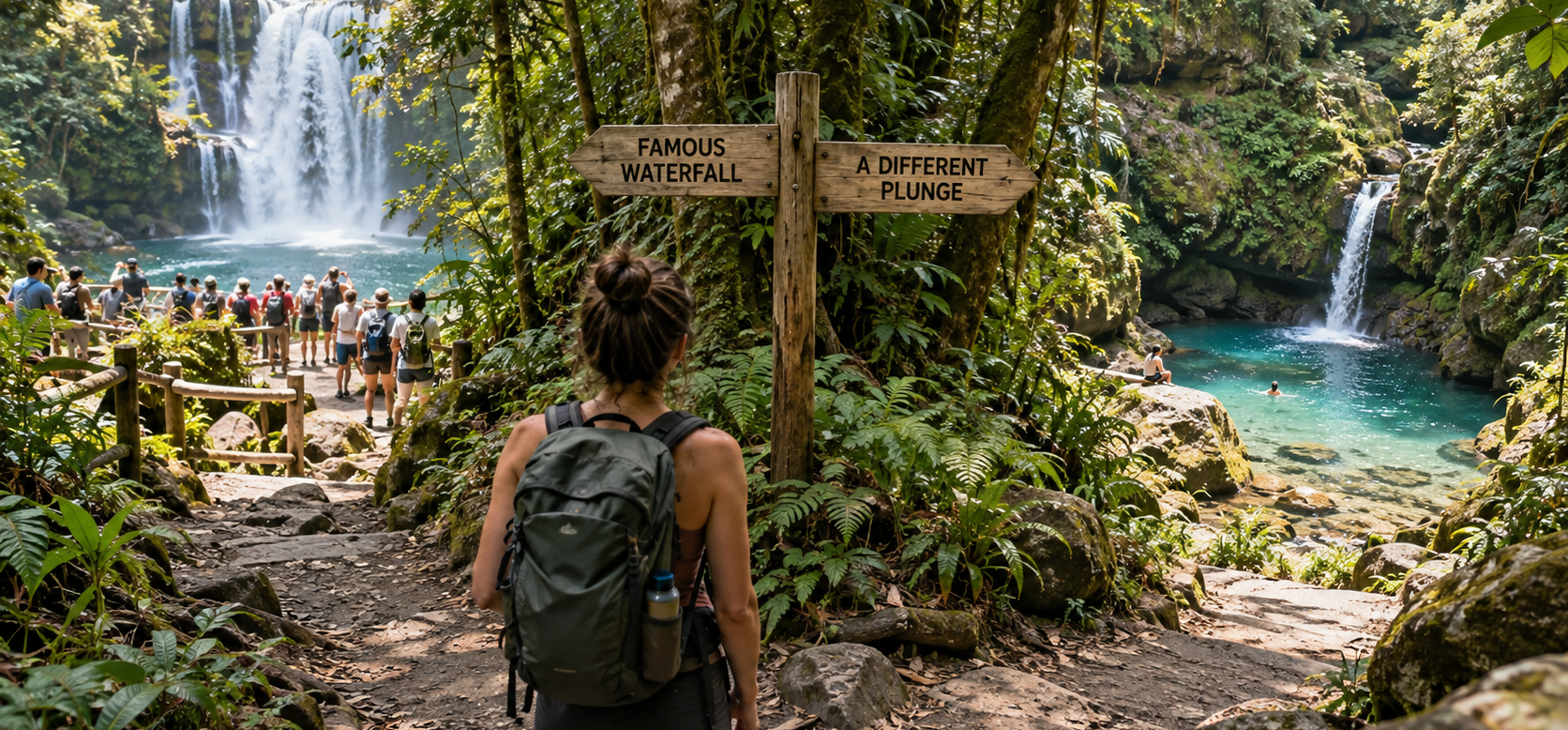
A single viral shot can pull tens of thousands of people toward one trailhead, overlook, or swimming hole. Meanwhile, an equally worthwhile spot ten miles away gets none of that traffic. Social creators do the work, and the destination doesn’t get much say in where the demand lands.
When high demand escalates into overtourism, the fix is more posts and compelling stories about all the other locations and experiences within your portfolio.
Travelers Are Chasing What the Place Represents
A traveler chasing a permit-only waterfall wants a refreshing plunge in turquoise water and a photo their friends will envy. The exact waterfall is incidental. A traveler queuing for a famous canyon overlook wants a dramatic backdrop and a story about how hard it was to earn.
This is where Behavioral Marketing comes in, enabling you to pinpoint your audience’s underlying motivations and remove blockers, including access issues related to overtourism.
Once a DMO understands what travelers are really chasing, whether it’s the intrinsic pull of a long-held bucket-list itch or the extrinsic pull of watching friends post from the same trip, it can point them toward different locations that deliver the same payoff with a fraction of the friction and a fraction of the traffic.
That only works if you actually know what people are chasing, and social provides a pretty clear window into that. Look at the comments under the viral post. Pay attention to the questions in the DMs and its partners’ inboxes. Listen to how people talk about why they want to visit in the first place. That’s market research you don’t have to pay for, and most destinations aren’t reading it closely enough.
Creator Partnerships Can Redistribute Demand
If creators are part of the reason demand piles up at one location, they’re also the fastest way to move it somewhere else.
Instead of giving every creator the same destination brief, think about what their audience is actually looking for and where else in the destination they can find it.
Send the photographer chasing dramatic light to a different overlook. Point the food-focused creator to the town people usually drive right through. Give the group planning a milestone trip an itinerary centered around a different kind of story worth sharing.
Different audiences want different things from the same region. The opportunity is to use creators to help them discover more of it.
Don’t Turn the Next Spot Into the Same Problem
Pushing every lesser-known location toward viral status recreates the exact overcrowding problem you started with. The goal is to spread out some of that demand and relieve pressure on the landmark site, not create the next hot spot that ends up facing the same challenges.
Seasonality plays into this, too. Some of it is predictable and tied to the events and seasons that already draw travelers to the region. Some of it isn’t. A trail floods or a park closes without warning. If a DMO already has alternative experiences ready to share, social can quickly give travelers another option: “You’re already here. Go do this instead.”
The more destinations can anticipate those moments, the less they have to react after overcrowding becomes a problem. Instead, become the source travelers turn to for where to go next, before the next viral moment makes that decision for them.
Ready to redirect demand instead of restricting it? Off Madison Ave builds behavior-driven marketing strategies for destinations managing crowded hero attractions. Let’s talk.